Art, exploration and a piece of Mars
“Robots of Mars”
A Martian landscape made tangible. Color, textured relief and real meteorite fragments connect the planet’s terrain with the robots we have sent to explore it.
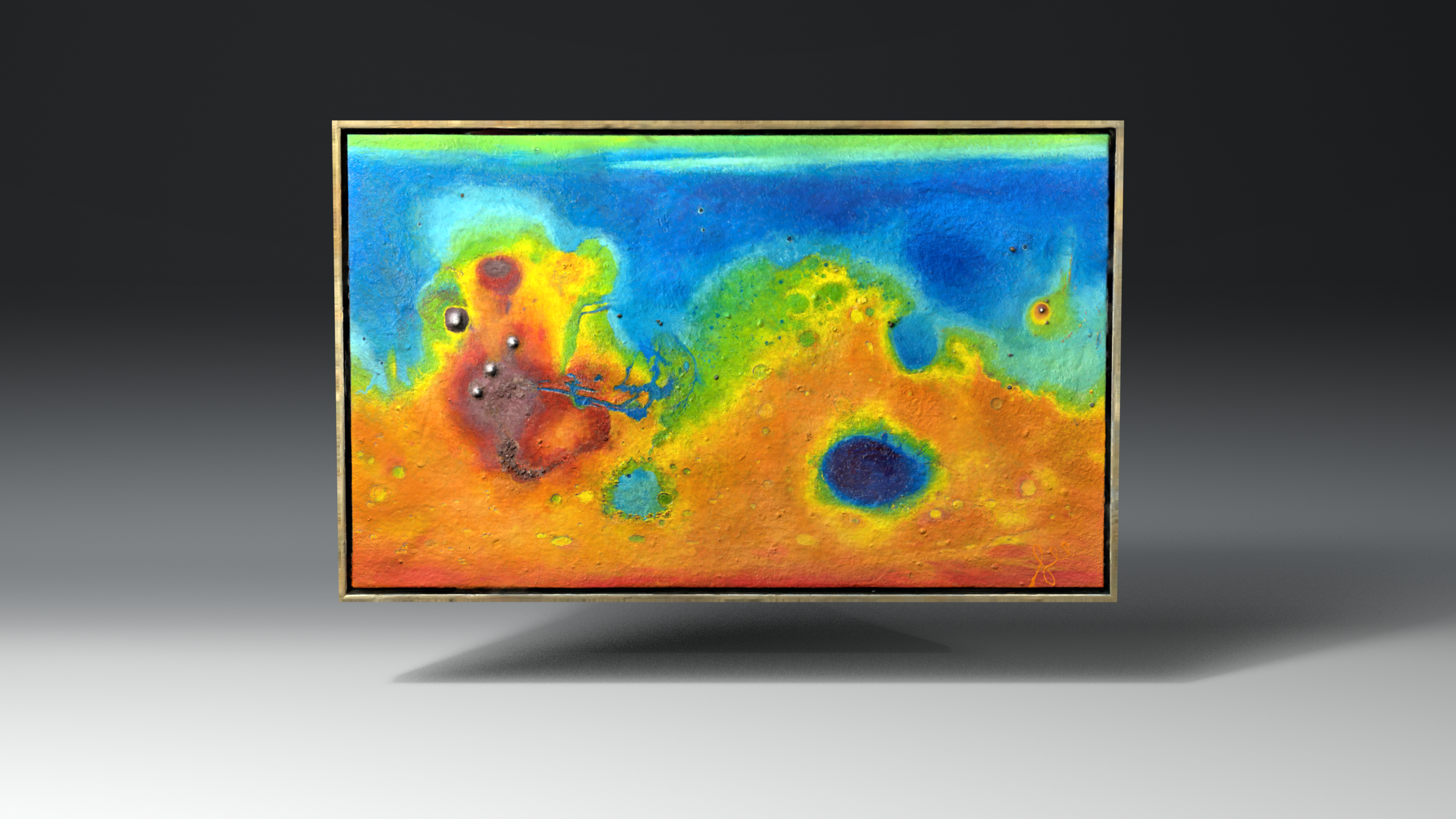
Earth materials, Martian matter
A landscape you can feel
- Artist
- E. Lee Wilson, Jr.
- Created
- 2021
- Medium
- Acrylic and mixed media on canvas supported by Luan board; sand, shells, pebbles, soil and NWA 6963 Martian meteorite fragments
- Canvas
- Approximately 60 × 36 inches, excluding the frame
The painting interprets a NASA color elevation map of Mars through a raised, tactile surface. Materials from Earth include Florida beach sand and seashells, along with pebbles and soil from the Meteor Crater area in Arizona. Meteorite fragments mark NASA landing sites, from Viking through Perseverance.
Artwork and materials: Artist’s original listing ↗ Artist’s 2021 account ↗
A physical connection
How Mars reaches Earth
A large impact can eject rock from Mars into space. A small amount eventually reaches Earth as meteorites. Scientists establish Martian origins through mineral and chemical evidence; in some specimens, trapped gases match the atmosphere measured on Mars.
The artwork’s documentation identifies its fragments as NWA 6963. The general evidence for Martian meteorites does not mean that each fragment in this painting was individually tested for trapped gases.
From robotic exploration to future human missions
MOXIE: making oxygen on Mars
MOXIE stands for the Mars Oxygen In-Situ Resource Utilization Experiment. The MIT-led instrument traveled aboard NASA’s Perseverance rover and demonstrated that oxygen could be made from Mars’ carbon-dioxide-rich atmosphere.
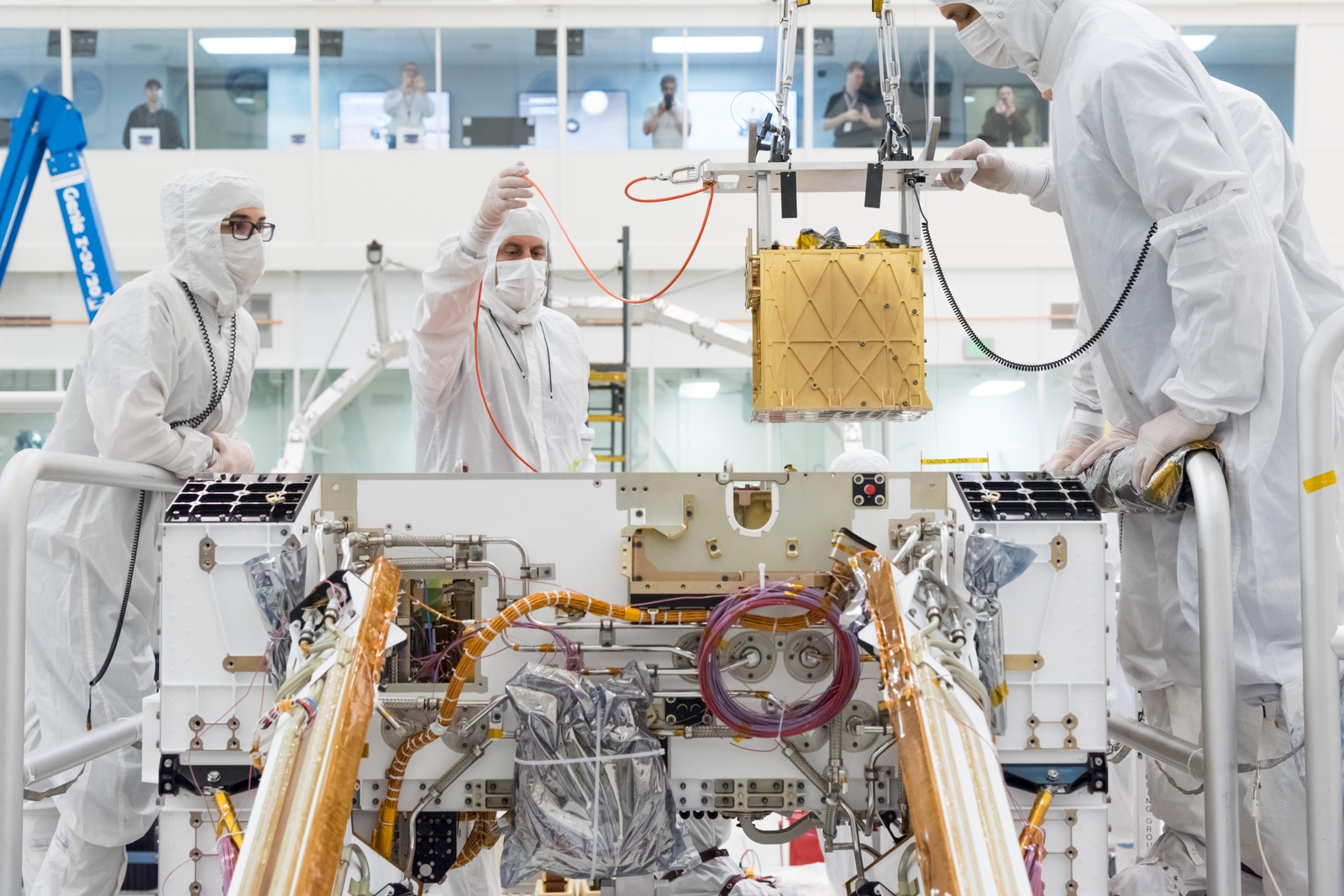
Use what is already there
MOXIE drew in Martian air, filtered and compressed it, then used an electrochemical process to separate oxygen from carbon dioxide. It measured the oxygen’s quantity and purity before releasing it back into the atmosphere.
- CO₂Martian air
- →Filter & compress
- ⚡Electrochemical separation
- O₂Measure & release
- Experimental runs
- 16
- Total oxygen produced
- 122 grams
- Peak production rate
- 12 grams/hour
- Oxygen purity at that rate
- ≥98%
Final run: August 7, 2023. Results: NASA/JPL mission report ↗
A step toward living and returning
A much larger system could make breathing oxygen and rocket oxidizer locally, reducing what future missions must bring from Earth. Oxygen is the oxidizer, not the fuel. Producing it at mission scale, then liquefying and storing it, remains a larger engineering undertaking.
The artwork’s own record
Turn it over. Read its history.
The reverse carries the certificate, printed explanation and the artist’s handwritten notes. These close-ups come from Lee’s photographs, preserving the actual lettering and the original fragment count.
Artwork documentation photographs supplied by E. Lee Wilson, Jr.
Art and exploration, together
A place beside MOXIE
In correspondence with Lee, Jeffrey Hoffman described a proposed mini-museum at the entrance to MIT’s new AeroAstro space. The plan places “Robots of Mars” at the center of a Mars exhibit alongside the MOXIE engineering model.
That Earth-based engineering model is distinct from the flight instrument aboard Perseverance. The display remains a plan described in the correspondence; an installation date has not been confirmed.
Source: Jeffrey Hoffman’s correspondence with the artist, October 6, 2026.
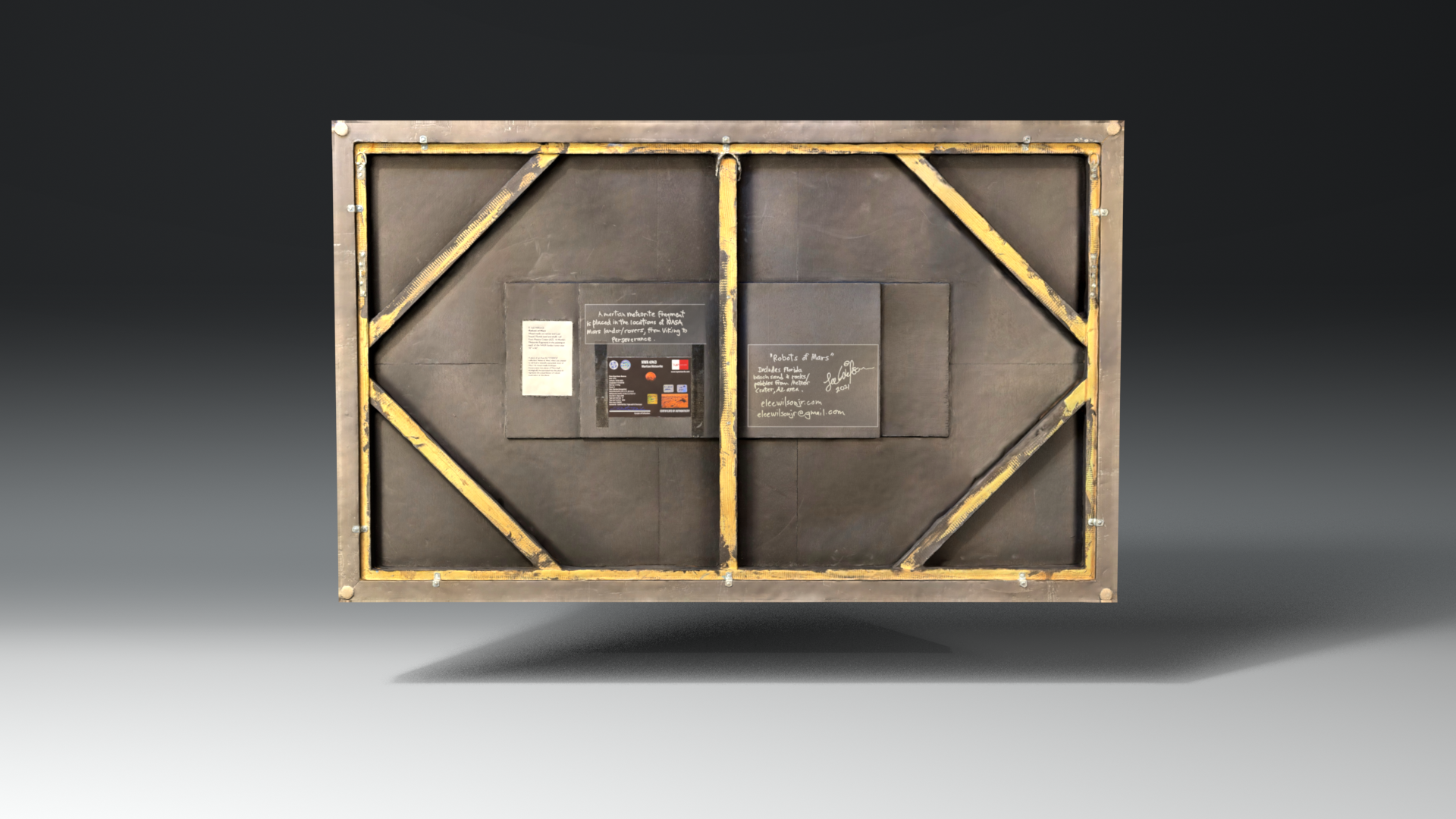
About this rendered view
This turntable presents Lee’s approved scan-based model in true perspective, with a level, centered rotation and restrained lighting. Captured painting relief, the canvas edge, rear supports and photographed documentation are preserved. Narrow repairs at the frame joins are inferred from the surviving frame; missing original grain has not been recovered. The displayed depth is a presentation estimate, not a physical measurement.
Playback uses rendered images and video. The original model and editable Blender file remain private and are not included in this page.